
10.02.26
How to Spot a Fake Banknote: Security Features Explained
How to Spot a Fake Banknote: Security Features Explained
In a world where counterfeit money is becoming increasingly sophisticated, knowing how to spot a fake banknote is an essential skill for individuals, businesses, and collectors alike. Modern banknotes are packed with advanced security features designed to thwart counterfeiters, but understanding what to look for can make all the difference. In this comprehensive guide, we’ll walk you through the most common banknote security features, how to check for them, and what to do if you suspect you’ve encountered a counterfeit note.
Why Banknote Security Matters
Counterfeit currency poses a serious threat to economies and individuals. For businesses, accepting a fake note can mean a direct financial loss, as banks do not reimburse counterfeit money. For individuals, unknowingly passing a fake note can lead to legal trouble. That’s why it’s crucial to be able to identify genuine banknotes and understand the security features that protect them.
Common Security Features in Modern Banknotes
Central banks around the world invest heavily in technology to make their currency as secure as possible. Here are the most common features you’ll find on genuine banknotes:
Holograms
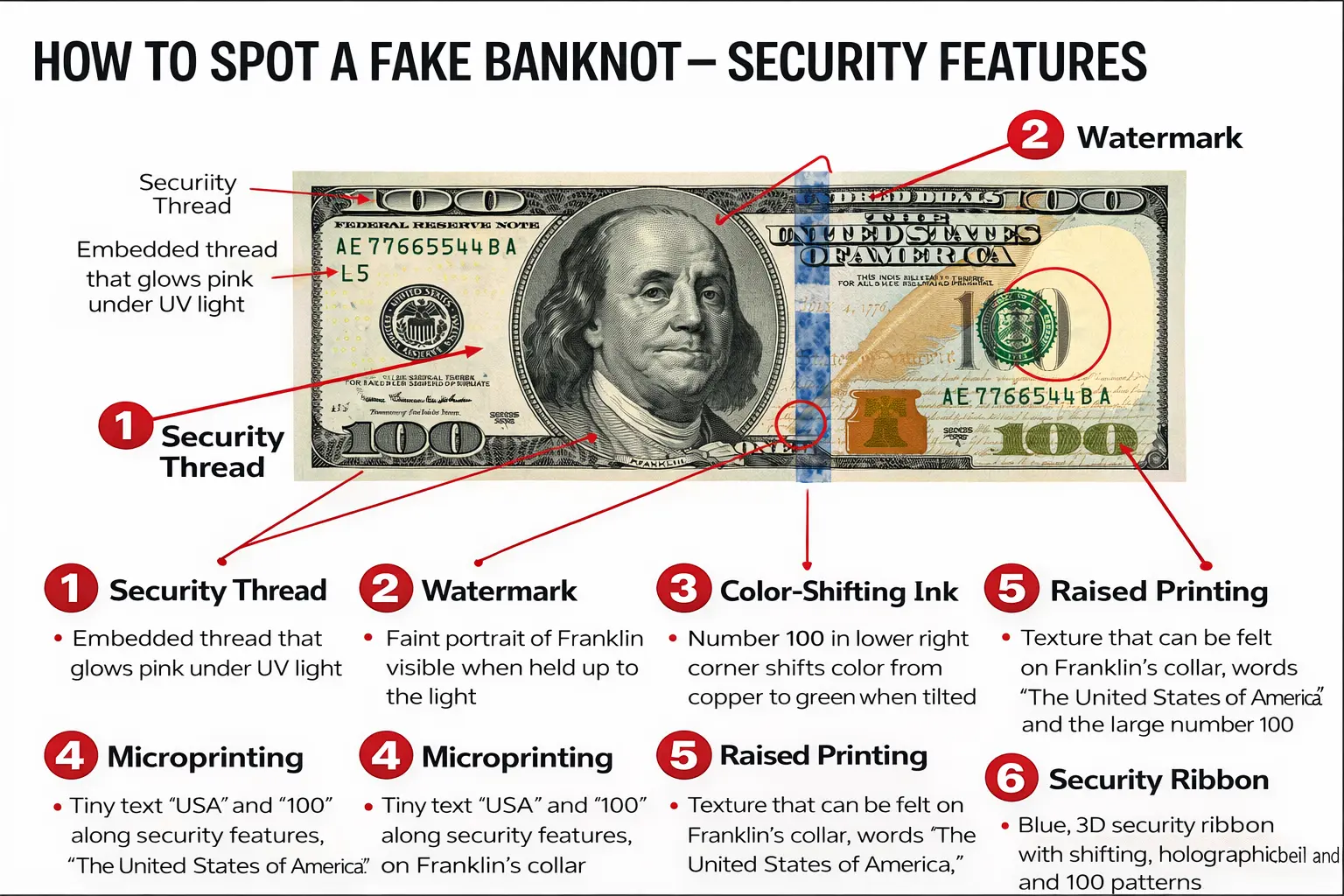
Many modern notes include a holographic patch or stripe that displays shifting colors and images when tilted. These holograms are difficult to replicate and are a quick visual check for authenticity.
Watermarks
Hold the note up to the light and look for a subtle image—usually a portrait or denomination—that is embedded in the paper. Watermarks are visible from both sides and are nearly impossible to reproduce with standard printers.
Security Threads
A thin, embedded thread runs vertically or horizontally through the note. Often, this thread will glow under ultraviolet (UV) light or display microprinted text with the denomination or issuing authority.
Color-Shifting Ink
Some denominations use ink that changes color when the note is tilted. This feature is commonly found on higher-value bills and is a strong indicator of authenticity.
Microprinting
Genuine banknotes often feature tiny, crisp text that is difficult to reproduce. Use a magnifying glass to check for microprinted words or numbers, typically found around portraits or borders.
UV Features
Under ultraviolet light, genuine notes reveal invisible patterns, fibers, or serial numbers that glow in specific colors. Counterfeit notes often lack these features or display them incorrectly.
Step-by-Step Guide: Checking for Counterfeit Notes
- Feel the Paper: Genuine banknotes are printed on special paper with a unique texture. If the note feels too smooth or thin, it could be fake.
- Check the Hologram and Watermark: Tilt the note and hold it up to the light to inspect these features.
- Look for the Security Thread: Find the embedded thread and see if it glows under UV light.
- Test Color-Shifting Ink: Tilt the note and observe any color changes in the ink.
- Examine Microprinting: Use a magnifier to check for tiny, clear text.
- Use a UV Light: Shine a UV lamp on the note to reveal hidden features.
For a deeper dive into how counterfeiters attempt to mimic these features, check out our SSD Chemical Solutions and Fake USD Dollar Bills categories to see the technology behind both real and replica notes.
How Counterfeiters Try to Imitate Security Features
Counterfeiters use a variety of methods to mimic genuine banknote features, including high-resolution printers, special inks, and even chemical treatments. However, most fakes fail to replicate the tactile feel, precise microprinting, and advanced UV features of real notes. Some may attempt to wash lower-denomination notes and reprint higher values—a process that can sometimes be detected by careful inspection or using SSD chemical solutions.
What to Do If You Suspect a Fake Banknote
- Do not return the note to the passer.
- Note the passer’s description and any companions.
- Contact local authorities or your bank immediately.
- Handle the note as little as possible and store it separately.
Reporting counterfeit notes helps authorities track and combat counterfeiting operations.
FAQs About Banknote Security
Q: Can counterfeit notes be detected by machines?
A: Yes, most modern cash-handling machines can detect fake notes using UV, magnetic, and infrared sensors.
Q: Are all security features visible to the naked eye?
A: No, some features require magnification or UV light to detect.
Q: What should I do if I accidentally accept a counterfeit note?
A: Report it to your local authorities or bank. Do not attempt to spend it.
Related Resources and Further Reading
- Customer Testimonials: See how others have benefited from our expertise.
- Shipping & Delivery Info: Learn about our secure and discreet shipping process.
- SSD Chemical Solutions: Explore advanced solutions for banknote cleaning and restoration.
- Fake USD Dollar Bills: Discover the technology behind replica notes.
Conclusion
Understanding how to spot a fake banknote is essential for protecting yourself and your business. By familiarizing yourself with modern security features and knowing what to look for, you can confidently identify genuine currency and avoid the risks associated with counterfeit money. For more expert guides, product information, or to explore our full range of solutions, visit Super Counterfeit Lab.